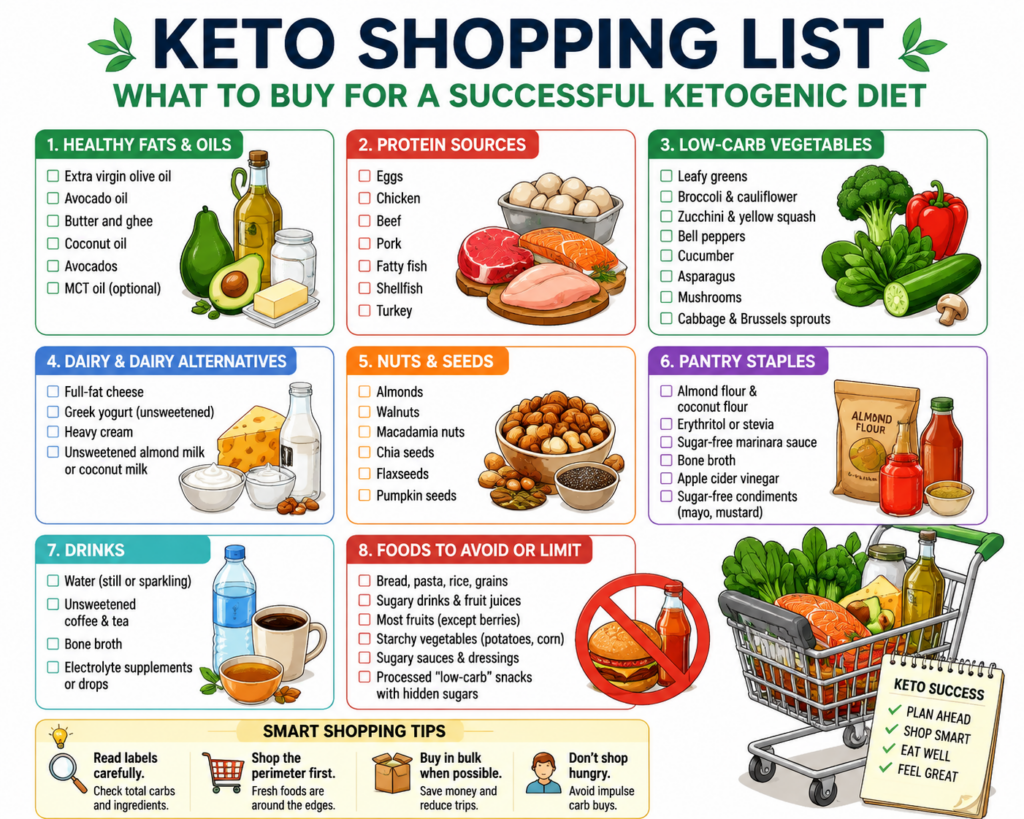
Keto Shopping List: What to Buy for a Successful Ketogenic Diet
One of the fastest ways to set yourself up for success on keto is walking into the grocery store with a clear plan. Wandering the aisles without a list is exactly how carbs sneak back into your cart — a “healthy” granola bar here, a flavored yogurt there, and suddenly your carb budget for the day is gone before lunch.
This shopping list breaks down exactly what to stock up on, organized by category, so you can shop with confidence and keep your kitchen fully keto-ready.
If you’re still new to the basics, our <a href=”/keto-for-beginners-guide”>beginner’s guide to starting keto</a> is a good place to start before you shop.
Healthy Fats and Oils
Fat is your primary fuel source on keto, so this category deserves real attention rather than an afterthought.
- Extra virgin olive oil
- Avocado oil
- Butter and ghee
- Coconut oil
- Avocados
- MCT oil (optional, for coffee or smoothies)
Protein Sources
- Eggs (a keto staple — versatile and affordable)
- Chicken (thighs and breast)
- Beef (ground beef, steak, roasts)
- Pork (chops, tenderloin, bacon)
- Fatty fish (salmon, mackerel, sardines)
- Shellfish (shrimp, crab)
- Turkey
Low-Carb Vegetables
- Leafy greens (spinach, kale, arugula)
- Broccoli and cauliflower
- Zucchini and yellow squash
- Bell peppers
- Cucumber
- Asparagus
- Mushrooms
- Cabbage and Brussels sprouts
Dairy and Dairy Alternatives
- Full-fat cheese (cheddar, mozzarella, cream cheese)
- Greek yogurt (unsweetened, full-fat)
- Heavy cream
- Unsweetened almond milk or coconut milk
Nuts and Seeds
- Almonds
- Walnuts
- Macadamia nuts (naturally low-carb and high-fat)
- Chia seeds
- Flaxseeds
- Pumpkin seeds
Pantry Staples
- Almond flour and coconut flour (for keto baking)
- Erythritol or stevia (low-carb sweeteners)
- Sugar-free marinara sauce (check labels for hidden sugar)
- Bone broth
- Apple cider vinegar
- Sugar-free condiments (mayonnaise, mustard)
Drinks
- Water (unsweetened, still or sparkling)
- Unsweetened coffee and tea
- Bone broth (also works as a savory drink)
- Electrolyte supplements or drops, especially in the first two weeks
Foods to Avoid or Limit
- Bread, pasta, rice, and grains
- Sugary drinks and most fruit juices
- Most fruits (except small portions of berries)
- Starchy vegetables (potatoes, corn)
- Sugary sauces and dressings
- Processed “low-carb” snacks with hidden sugars or fillers
Smart Shopping Tips
- Read labels carefully. “Low-carb” or “keto-friendly” packaging claims aren’t always accurate — check total carbs and ingredients directly.
- Shop the perimeter of the store first. Fresh produce, meat, and dairy are typically located around the edges, while processed carb-heavy foods dominate the center aisles.
- Buy in bulk when possible. Staples like olive oil, nuts, and frozen proteins store well and reduce the number of trips you need to make.
- Don’t shop hungry. This applies to any diet, but it’s especially relevant on keto, where cravings for quick carbs can be strong during the adjustment period.
Simplifying the Process
Even with a solid shopping list, deciding what to actually cook each week is often the bigger challenge. A shopping list tells you what to buy — it doesn’t tell you how to turn those ingredients into a full week of meals without repeating the same three dishes.
If that part of keto feels like the bigger obstacle, a structured, ready-made meal plan can bridge that gap. We take a closer look at one option in our <a href=”/ultimate-keto-meal-plan-review”>Ultimate Keto Meal Plan review</a>, which pairs meal plans with matching recipes so your shopping list is already built for you.
Frequently Asked Questions
Do I need to buy special “keto” branded products? No. Most keto staples are simply whole, unprocessed foods you can find in any regular grocery store — special branded products aren’t necessary and are often more expensive.
Are frozen vegetables okay on keto? Yes, as long as they’re plain (not in sauces) and low in starchy vegetables like corn or peas.
What sweeteners are keto-friendly? Erythritol, stevia, and monk fruit are commonly used low-carb sweeteners. Regular sugar, honey, and maple syrup should be avoided.
Can I eat fruit on keto? Small portions of berries (like raspberries or blackberries) are the most keto-friendly fruit option due to their lower sugar content.
Is buying organic necessary for keto? Not necessarily. Organic is a personal preference and budget decision — it doesn’t affect whether a food fits within your carb limits.
Final Thoughts
A well-stocked kitchen is one of the simplest ways to make keto sustainable. When your fridge and pantry are already full of the right ingredients, staying on track becomes far less about willpower and far more about simply reaching for what’s already there.
Once your shopping list is dialed in, the next challenge is turning those ingredients into meals you’ll actually look forward to eating — which is exactly where a structured meal plan can make the biggest difference.
Disclaimer: This article is for informational purposes only and does not constitute medical advice. Consult a healthcare professional before starting any new diet program.