Keto Diet Mistakes Beginners Make (And How to Avoid Them)
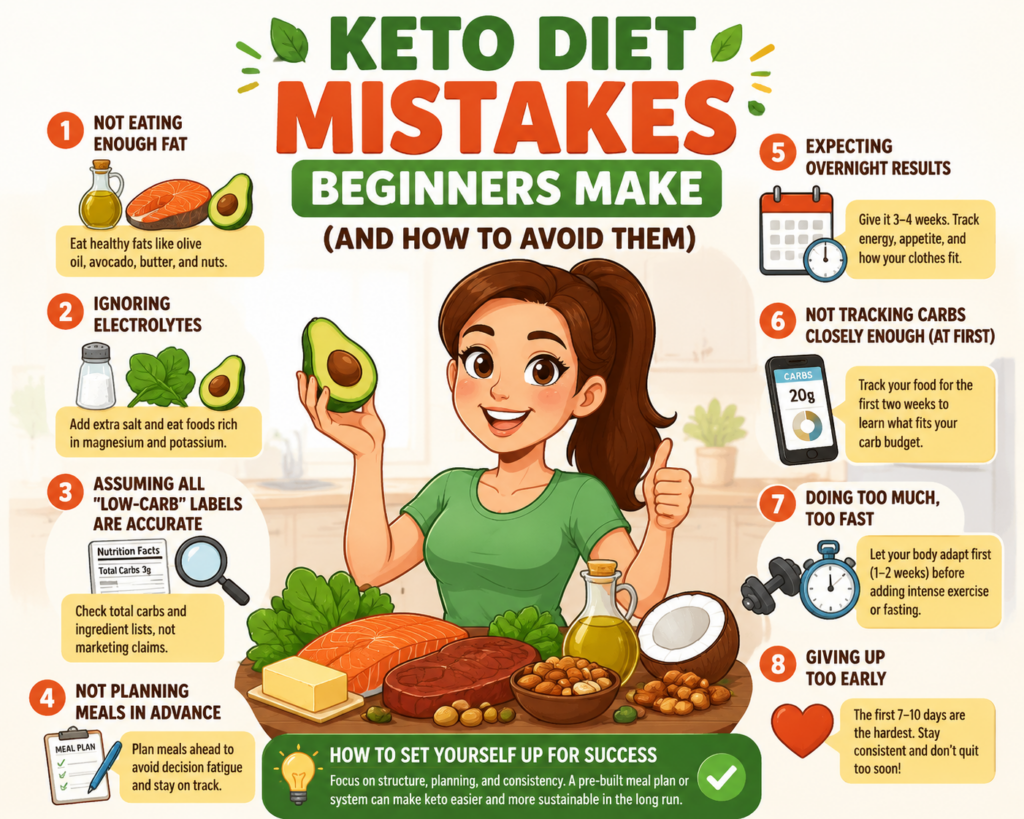
The ketogenic diet works — but a surprising number of people quit within the first few weeks, convinced it “didn’t work for them.” In most cases, the diet wasn’t the problem. A handful of common, avoidable mistakes were quietly working against them the entire time.
If you’re just getting started, understanding these mistakes upfront can save you weeks of frustration. And if you’ve already tried keto before without success, one of these might explain why.
If you haven’t already, it’s worth reading our <a href=”/keto-for-beginners-guide”>guide on how to start keto the right way</a> first, since it covers the fundamentals this article builds on.
Mistake #1: Not Eating Enough Fat
This is by far the most common mistake. Many beginners come from a low-fat dieting background and instinctively keep fat intake low even while cutting carbs. The problem: if you’re low on both carbs and fat, your body doesn’t have enough fuel from either source, which leads to fatigue, irritability, and intense cravings.
Fix: Don’t be afraid of healthy fats like olive oil, avocado, butter, and nuts. On keto, fat isn’t the enemy — it’s your primary fuel source.
Mistake #2: Ignoring Electrolytes
Cutting carbs causes your body to release more water and sodium than usual, which can lead to imbalances in sodium, potassium, and magnesium. This is the leading cause of the so-called “keto flu” — headaches, fatigue, muscle cramps, and brain fog during the first week.
Fix: Add extra salt to your meals, and consider magnesium and potassium-rich foods (like leafy greens and avocado) or a supplement if needed.
Mistake #3: Assuming All “Low-Carb” Labels Are Accurate
Packaged foods labeled “low-carb” or “keto-friendly” aren’t always what they claim to be. Some contain hidden sugars, high glycemic sweeteners, or misleading serving sizes that quietly add up.
Fix: Check total carbs and ingredient lists rather than relying on front-of-package marketing claims.
Mistake #4: Not Planning Meals in Advance
This is arguably the biggest reason people abandon keto — not because the science fails, but because daily decision fatigue wins. Figuring out three keto-compliant meals from scratch, every single day, is exhausting for most people.
Fix: Plan meals ahead of time, whether that means batch cooking on weekends or using a structured meal plan that removes the daily guesswork. If this is the part of keto you find most overwhelming, our <a href=”/ultimate-keto-meal-plan-review”>review of the Ultimate Keto Meal Plan</a> covers one option built specifically to solve this problem.
Mistake #5: Expecting Overnight Results
Ketosis typically takes 2–4 days to kick in, and meaningful fat-loss results build gradually over weeks, not days. Beginners who expect dramatic changes in the first few days often get discouraged and quit right before results would have started showing.
Fix: Give the process at least 3–4 weeks before judging whether it’s working. Track non-scale progress too — energy levels, appetite control, and how your clothes fit.
Mistake #6: Not Tracking Carbs Closely Enough (At First)
Carbs add up quickly, even from seemingly small sources — a splash of milk in coffee, a sauce with hidden sugar, or an extra piece of fruit. Many beginners underestimate their carb intake without realizing it.
Fix: Track your food intake for at least the first two weeks. Once you develop a feel for which foods fit your carb budget, tracking becomes less necessary.
Mistake #7: Doing Too Much, Too Fast
Some beginners try to combine keto with intense workout routines or extended fasting right from day one. Adding multiple major changes at once makes it harder for your body to adapt and increases the odds of burning out early.
Fix: Let your body adjust to ketosis first (roughly 1–2 weeks) before layering on intense exercise or fasting protocols.
Mistake #8: Giving Up Too Early
Perhaps the most common mistake of all: quitting during the adjustment period, right when things are about to get easier. The first week is almost always the hardest part of keto — energy dips, cravings can be intense, and the “keto flu” is at its peak.
Fix: Remind yourself that the first 7–10 days are temporary. Most people report significantly more stable energy and reduced cravings once they’re fully adapted.
How to Set Yourself Up for Success
The pattern across nearly all of these mistakes is the same: lack of structure and planning. Keto itself is a straightforward set of principles — the hard part is consistently applying them every single day without burning out on decision-making.
That’s exactly why many beginners find it easier to follow a pre-built system rather than improvising meals from scratch. If daily meal planning sounds like the part of keto most likely to derail you, it may be worth exploring a structured option — we covered one in detail in our <a href=”/ultimate-keto-meal-plan-review”>Ultimate Keto Meal Plan review</a>.
Frequently Asked Questions
How long does the “keto flu” usually last? Typically 3–7 days for most people, though staying hydrated and replenishing electrolytes can significantly reduce its severity.
Why am I not losing weight on keto even though I’m following it? Common culprits include hidden carbs in packaged foods, insufficient fat intake causing overeating elsewhere, or simply needing more time for your body to adapt.
Is it normal to feel tired during the first week of keto? Yes, this is common as your body shifts from burning glucose to burning fat for fuel. It typically improves significantly after the first week.
Can I make mistakes and still succeed on keto? Absolutely. Keto isn’t about perfection — occasional slip-ups won’t undo your progress as long as you get back on track consistently.
Do I need to avoid all fruit on keto? Not entirely, but most fruits are high in natural sugars. Berries in moderation are generally the most keto-friendly option.
Final Thoughts
Most keto “failures” aren’t really failures of the diet itself — they’re the result of a handful of avoidable mistakes, especially around fat intake, electrolytes, and meal planning. Now that you know what to watch for, you’re already ahead of most beginners.
If meal planning is the piece you’re most worried about getting wrong, a structured, done-for-you approach can remove much of that risk entirely — something worth considering as you move forward.
Disclaimer: This article is for informational purposes only and does not constitute medical advice. Consult a healthcare professional before starting any new diet program.