Keto vs. Intermittent Fasting: Which One Is Better for You?
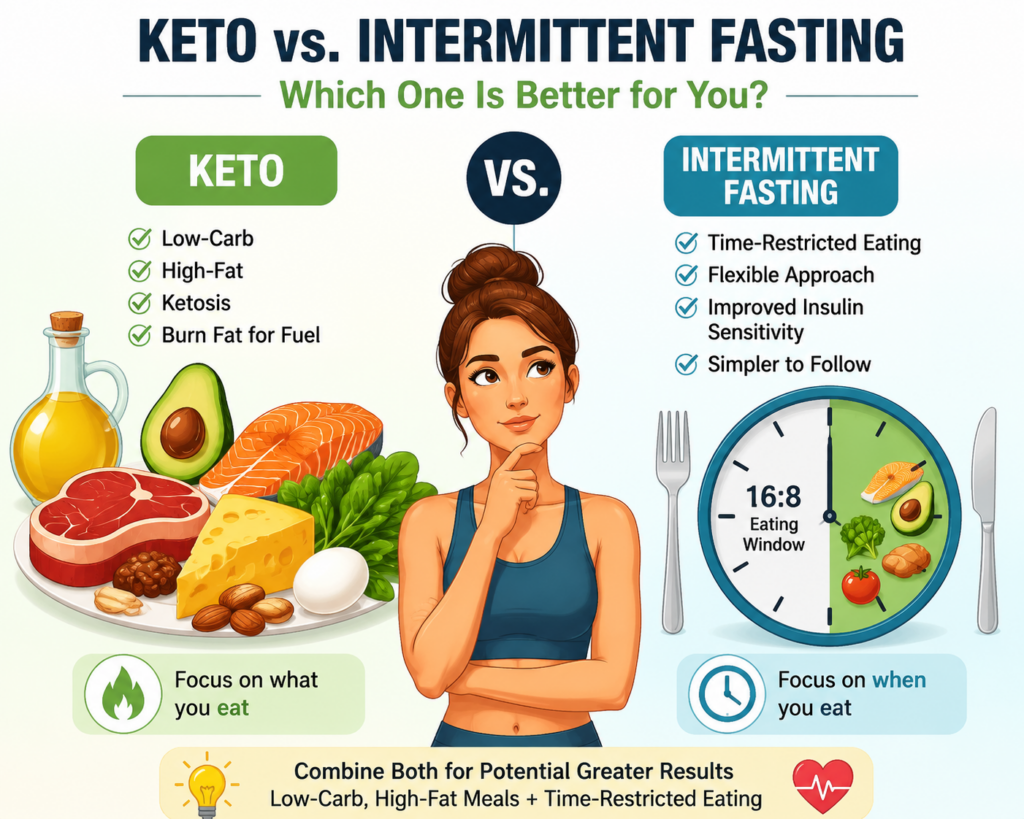
Keto and intermittent fasting are two of the most popular approaches to weight loss and metabolic health — and they’re often mentioned together, sometimes even combined. But they work in different ways, and choosing the right one (or deciding whether to combine them) depends on your goals, lifestyle, and how your body responds to each.
This guide breaks down how each approach works, their key differences, and how to decide which one fits you best.
If you’re not yet familiar with the basics of keto, our <a href=”/keto-for-beginners-guide”>beginner’s guide to starting keto</a> covers the fundamentals this article builds on.
What Is the Ketogenic Diet?
Keto is a low-carb, high-fat eating approach that shifts your body into ketosis — a metabolic state where it burns fat for fuel instead of glucose. It’s primarily about what you eat: significantly reducing carbohydrates (typically to 20–50g net carbs per day) while increasing healthy fat intake.
Keto is a full-time eating pattern rather than a time-restricted one — you follow the macronutrient guidelines every day, regardless of when you eat.
What Is Intermittent Fasting?
Intermittent fasting (IF) isn’t about what you eat, but when you eat. It involves cycling between periods of eating and fasting, with several common approaches:
- 16:8 — Fasting for 16 hours, eating within an 8-hour window
- 5:2 — Eating normally 5 days a week, significantly reducing calories on 2 non-consecutive days
- OMAD (One Meal a Day) — Eating all daily calories within a single meal
During fasting windows, your insulin levels drop and your body increasingly relies on stored fat for energy — a process that shares some overlap with the metabolic effects of keto.
Key Differences Between Keto and Intermittent Fasting
| Factor | Keto | Intermittent Fasting |
|---|---|---|
| Main focus | What you eat (macros) | When you eat (timing) |
| Carb restriction | Yes, strict | Not necessarily |
| Eating window | No restriction | Restricted (e.g., 8 hours) |
| Adaptation period | 1–2 weeks | Days to a couple of weeks |
| Flexibility | Requires planning meals/macros | Flexible with food choices |
| Common goal | Fat loss, appetite control, mental clarity | Fat loss, insulin sensitivity, simplicity |
Potential Benefits of Keto
- Sustained energy without blood sugar spikes and crashes
- Reduced appetite and cravings once fully adapted
- Structured approach that’s easy to plan around with meal prep
- Often easier to sustain long-term once habits are established
Potential Benefits of Intermittent Fasting
- Simpler to follow for people who don’t want to track macros closely
- Can be combined with virtually any eating style, including keto
- May improve insulin sensitivity over time
- Naturally reduces the eating window, which often lowers overall calorie intake
Can You Combine Keto and Intermittent Fasting?
Yes — and many people do. Combining both means eating within a restricted window (like 16:8) while also following low-carb, high-fat meals during that window. Because both approaches work by reducing reliance on glucose for fuel, some people find the combination accelerates their transition into ketosis and enhances appetite control.
That said, combining two significant changes at once can be harder to sustain, especially for beginners. If you’re new to either approach, it’s often more manageable to introduce one at a time — get comfortable with keto first, then experiment with a fasting window once your body has adapted.
Which One Should You Choose?
Consider keto if you:
- Prefer structure and enjoy planning meals in advance
- Struggle with sugar cravings and want a diet that reduces them
- Are looking for sustained energy throughout the day, not just around eating windows
Consider intermittent fasting if you:
- Prefer flexibility in what you eat, without tracking macros
- Have a busy schedule and like the simplicity of fewer meals to plan
- Want an approach that’s easy to layer on top of an existing diet
Consider combining both if you:
- Have experience with at least one of the two approaches already
- Want to potentially accelerate fat loss and ketosis
- Are comfortable adjusting your routine gradually rather than all at once
A Note on Sustainability
Regardless of which approach you choose, the deciding factor in long-term success is rarely the method itself — it’s whether you can realistically stick with it. Many people who struggle with keto specifically cite the daily meal-planning burden as their biggest obstacle, which is a large part of why structured, done-for-you meal plans have become popular. We cover one such option in our <a href=”/ultimate-keto-meal-plan-review”>Ultimate Keto Meal Plan review</a>, which pairs well with either a standard keto schedule or a fasting window.
Frequently Asked Questions
Is intermittent fasting safe for everyone? Not necessarily. Pregnant or breastfeeding individuals, people with a history of disordered eating, and those with certain medical conditions should consult a doctor before trying intermittent fasting.
Which one leads to faster weight loss, keto or IF? Results vary significantly by individual. Some people respond better to macro changes (keto), while others see better results from timing changes (IF) — there’s no universal answer.
Do I need to be in ketosis for intermittent fasting to work? No. Intermittent fasting can be effective on its own, independent of a low-carb diet, though many people find the two work well together.
Is it normal to feel hungry when starting intermittent fasting? Yes, especially in the first week. Hunger typically becomes more manageable as your body adjusts to the new eating window.
Can I drink coffee during a fasting window? Black coffee (without sugar, milk, or cream) is generally considered acceptable during fasting windows, as it has minimal impact on insulin levels.
Final Thoughts
Keto and intermittent fasting tackle fat loss and metabolic health from two different angles — one through what you eat, the other through when you eat. Neither is objectively “better”; the right choice depends on which approach fits your lifestyle, preferences, and how your body responds. Whichever path you choose, the biggest factor in success will always be consistency over time, not the method itself.
Disclaimer: This article is for informational purposes only and does not constitute medical advice. Consult a healthcare professional before starting any new diet or fasting program.